
What to Know About a C-Section
Why C-sections happen, what to expect during surgery, how to lower your chance of an unnecessary one, and the questions to ask when one is recommended.
BirthX Team · · 9 min read
Download summary (PDF)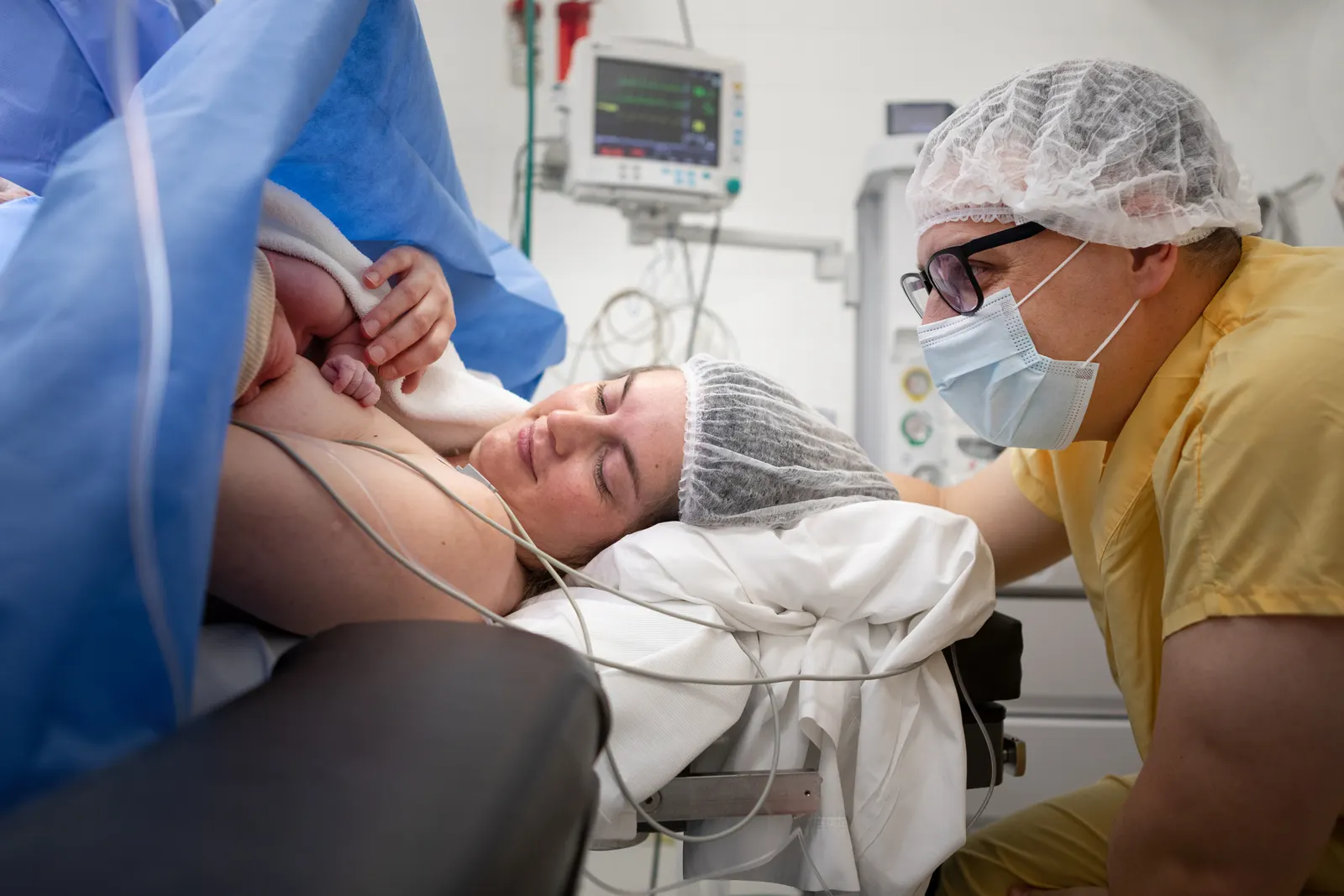
Cesarean birth is one of the most common surgeries in the United States, accounting for about 1 in 3 births. A cesarean birth, commonly called a C-section and sometimes a belly birth, is a surgical procedure to deliver a baby through an incision in the abdomen and uterus. Some C-sections are planned before labor begins. Others become necessary during labor when circumstances change.
Why Might a C-Section Be Recommended?
Sometimes the safest way for a baby to be born is through surgery. If a C-section becomes part of your birth, understanding the reason can make the experience feel less overwhelming. Common reasons include:
Often Planned Ahead of Time
- Previous cesarean birth — some people who have had a C-section before plan another one, though many can safely try for a vaginal birth.
- Placenta previa — the placenta partly or completely covers the cervix, blocking the baby's path through the vagina.
- Baby's position — some breech (bottom- or feet-first) or transverse (sideways) positions make vaginal birth less safe or less likely to succeed.
- Twins or more — depending on the babies' positions and other factors.
- Certain health conditions — some conditions in the pregnant person or baby make cesarean birth the safer option.
Often Decided During Labor
- Labor arrest — labor stops progressing despite enough time and appropriate support or treatment.
- Concerns about the baby's well-being — such as persistent changes in the baby's heart rate.
- Placental abruption — the placenta separates from the uterine wall before birth, which can cause bleeding and reduce the baby's oxygen supply.
- Umbilical cord prolapse — the cord slips through the cervix ahead of the baby and may become compressed.
- Uterine rupture — a tear in the uterine wall, usually where there's a previous scar, that needs urgent treatment.
C-sections can be lifesaving, but the decision to have one isn't always clear-cut or immediate. Labor is unpredictable, and a change in how it's going doesn't necessarily mean surgery is the only path forward. Depending on the situation, there may be time to wait and see, try a different approach, or consider other options first.
When there's time, you deserve to understand why a C-section is being recommended and to take part in the decision. Your care team should explain:
- What they're concerned about
- How urgent the situation is
- The benefits and risks of surgery
- Whether there are reasonable alternatives
The goal isn't to avoid a C-section when one is needed. It's to understand your options and make informed decisions about your care.
Planned, Elective, Unplanned, and Emergency C-Sections
Not every C-section happens under the same circumstances. Some are decided weeks before birth, others come up during labor, and some happen quickly in an emergency. Knowing the difference can give you a better idea of what to expect and how much time you may have to talk through your options.
A planned C-section is scheduled before labor begins, usually because you and your care team know ahead of time that a cesarean may be the safest way for your baby to be born. If there's no medical reason to deliver earlier, a planned C-section is usually scheduled at or after 39 weeks, giving your baby's lungs, brain, and other organs time to finish important development.
An elective C-section is also scheduled ahead of time, but the term generally refers to choosing a cesarean when vaginal birth is still considered an option. (Some providers call this a cesarean on maternal request and use "elective" for any scheduled C-section, so it's worth asking what they mean.) There are many reasons someone might consider one, and the decision is personal. If you're thinking about it, your provider can help you understand the benefits and risks, what surgery and recovery may look like, and how a C-section could affect future pregnancies.
An unplanned C-section happens when you planned for a vaginal birth, but something changes during labor and a cesarean is recommended. Maybe labor has stopped progressing despite enough time and support, or there are ongoing concerns about how your baby is tolerating labor. Unplanned doesn't always mean an emergency. There may still be time to understand what's happening, ask questions, and talk through next steps.
An emergency C-section is different. It happens when there's an urgent concern for you or your baby, before or during labor, and birth needs to happen quickly. In these situations, there may be much less time for conversation or preparation, but your care team should still keep you informed as much as they can.
What Happens During a C-Section?
Although every hospital and birth is a little different, a C-section generally involves four stages: preparation, anesthesia, surgery, and recovery.
Before Surgery
The details vary by hospital and by how urgent the birth is. For a scheduled C-section, you will usually receive instructions about when to stop eating or drinking and when to arrive. Once you are there, the team will review your history, check you and your baby, and prepare you for surgery. If a C-section becomes necessary during labor, some of these steps, like an IV or monitoring, may already be in place, so preparation can move more quickly. In an emergency, things may happen fast and several steps may be done at once, but your care team should still tell you what's happening as they go.
- An IV is usually placed for fluids and medications.
- Antibiotics are commonly given to reduce the risk of infection.
- You may be given an antacid to drink, and sometimes other medication, to reduce stomach acid in case you vomit during surgery.
- A urinary catheter is usually placed around the time of anesthesia.
- Your vital signs and your baby's heart rate are checked.
- You will meet members of the surgical and anesthesia teams and have a chance to ask questions.
- Your support person may be asked to change into operating-room clothing before joining you, depending on the situation and hospital policy.
What Kind of Anesthesia Is Used?
Most C-sections are performed with regional anesthesia, which numbs the lower half of your body while allowing you to stay awake. A spinal is commonly used for a planned C-section. If you already have a working epidural during labor, the anesthesiologist may be able to give stronger medication through it for surgery.
Tell the anesthesia team if you feel pain, nausea, anxiety, pressure that feels intolerable, or anything else that concerns you. They're with you throughout the surgery and can often adjust your medication or help you feel more comfortable.
General anesthesia, which makes you unconscious, is used less often. It may be necessary in some emergencies or when regional anesthesia can't be used.
What Happens During the Surgery?
Once the anesthesia is working, a drape is placed between you and the surgical area. Your abdomen is cleaned, and the surgeon makes an incision through the skin and then an incision in the uterus. Most skin incisions are low and horizontal, although the uterine incision is what matters most for future birth options.
You should not feel sharp surgical pain, but you may feel pressure, pulling, tugging, or movement as your baby is born. If your baby is doing well, the umbilical cord may be clamped after a short delay, usually 30 to 60 seconds, before the team assesses your baby. When you and your baby are both stable, skin-to-skin contact and early feeding may be possible, depending on your hospital and the circumstances.
The placenta is delivered, the uterus and other tissues are checked, and the incisions are closed. The whole surgery usually takes about 45 minutes to an hour. Your baby is often born within the first 10 to 15 minutes, and most of the remaining time is spent closing the incisions.
Recovery in the Hospital
After surgery, you'll be moved to a recovery area, often called the PACU (post-anesthesia care unit), where you'll be monitored closely while the anesthesia begins to wear off. Some hospitals use a recovery room in the labor and delivery unit instead. You'll usually stay there for one to two hours before moving to a postpartum room. Your care team will check your blood pressure, bleeding, incision, pain, and recovery from anesthesia. Your urinary catheter is usually removed within about 12 to 24 hours, and your IV may stay in until you're eating and drinking well and no longer need IV medications.
A nurse will also regularly press firmly on your abdomen to check that your uterus is contracting and becoming firm. This is called fundal massage, and it helps reduce bleeding. It can be uncomfortable, especially near your incision, so let your nurse know if you need pain medication beforehand or need them to go slower.
Early movement is usually encouraged once it's safe, because walking can support recovery and help reduce the risk of blood clots. Pain control matters, too. Let your team know if your medication isn't keeping you comfortable enough to breathe deeply, move, rest, and care for your baby.
What Are the Risks of a C-Section?
C-sections are common and generally safe, but they are still major surgery. Possible complications include:
- Infection, including of the incision or the uterus
- Heavy bleeding
- Blood clots in the legs or lungs
- Reactions or complications related to anesthesia
- Injury to nearby organs, such as the bladder or bowel
Recovery also usually takes longer than after a vaginal birth.
Babies born by planned cesarean before labor begins may have a higher chance of some breathing problems. This is especially true when birth happens before 39 weeks without a medical reason for earlier delivery.
A cesarean scar can also affect future pregnancies. With each additional C-section, the risk of placenta previa and placenta accreta spectrum increases. Placenta accreta spectrum is a condition in which the placenta grows too deeply into the uterine wall. A previous C-section also slightly raises the risk of uterine rupture if you labor in a future pregnancy. None of this means a future pregnancy will have complications, but it's one reason your plans for more children may be part of the conversation.
When a C-section is recommended, these risks are weighed against the risks of continuing toward a vaginal birth. Your care team can help you understand how they apply to your situation.
You Still Have Choices
A C-section may not be the birth you expected, or it may be exactly what you planned. Either way, you deserve clear information and respectful care. If there's time, ask what's happening and why, tell your team what matters to you, and ask which of your preferences can still be supported. Depending on your hospital and the situation, these might include having your support person with you, a clear drape so you can see your baby being born, skin-to-skin contact in the operating room, or delayed cord clamping.
It's also normal to have mixed feelings afterward, especially if your birth didn't go the way you hoped. Talking it through with your care team, your support person, or a counselor can help.
To learn more:
- Planning a C-section? Our guide to family-centered C-section options covers ways to personalize a planned or non-emergency cesarean.
- Hoping for a vaginal birth? Our guide to reducing your chances of a C-section explains steps that may help when a cesarean isn't medically necessary.
- Had a C-section before? Our VBAC vs. repeat C-section guide can help you understand your options.
Sources
For education only; not a substitute for individualized medical advice. Sources reviewed for this article:
Want to save or share this?
Get a one-page summary to print or bring to your next appointment.